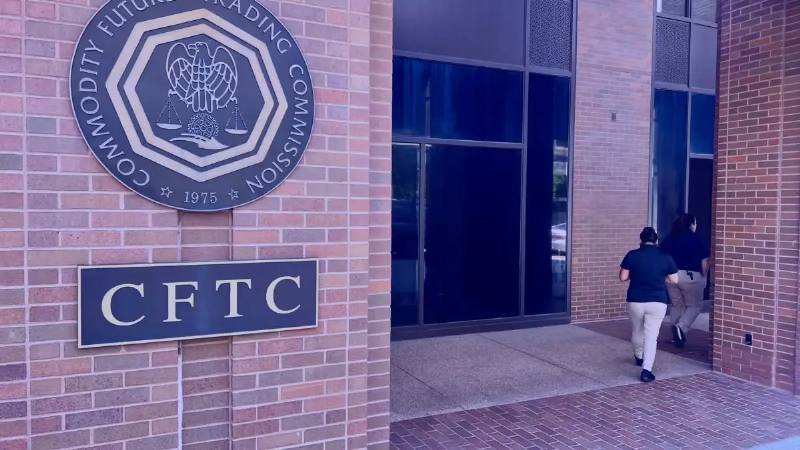
- The CFTC will hold a public roundtable on whether US derivatives markets can trade around the clock.
- Weekend margin calls, when banks are closed, are at the center of the agenda.
- Regulators will ask whether stablecoins and tokenized Treasuries can move collateral outside banking hours.
- The meeting collects industry input and does not change any rules by itself.
The Commodity Futures Trading Commission will host a public roundtable at its Washington headquarters on December 15 to examine whether US derivatives markets can move to continuous trading, including weekends and holidays. A detailed agenda published on November 17 gives a full session of the three-hour meeting to stablecoins, tokenized assets and blockchain-based clearing. That matters for crypto because regulators keep coming back to one obstacle, which is collateral: an exchange can stay open on a Sunday, while the banks that move margin money still shut down for the weekend.
Three Sessions Built Around One Bottleneck
The meeting runs from 1:00 to 4:00 p.m. ET and will be livestreamed on CFTC.gov. CFTC Chairman Michael Selig announced the event on October 28, and in the agency’s original announcement he said the CFTC would not take a one-size-fits-all approach to 24/7 trading. The November agenda splits the afternoon into three blocks, and no panelist roster has been published yet.
| Session | Time (ET) | What regulators want answered |
|---|---|---|
| Market readiness | 1:10 – 1:55 p.m. | Which asset classes could trade nonstop now, in one to two years, later or never |
| Clearing and collateral | 2:05 – 2:55 p.m. | Whether stablecoins and tokenization can keep margin moving when banks are closed |
| Market integrity | 3:05 – 3:55 p.m. | Weekend liquidity, manipulation risk, circuit breakers and running costs |
Source: CFTC roundtable agenda, November 17, 2026.
The first session separates financial contracts from those tied to physical goods such as crude oil or grain, where delivery logistics and regional business hours make a round-the-clock schedule much harder to justify. The last one looks at whether thinner weekend order books could let a single large trade move prices sharply and set off a chain of forced liquidations in leveraged markets, and what it costs an exchange to staff, patch and protect systems that never go offline.
Why a Sunday Margin Call Is the Real Test
Clearinghouses revalue leveraged derivatives positions continuously, and when prices move against a trader they demand extra collateral, often within hours. Today that demand rarely lands while the payment system is shut, because the markets close too. Once trading runs through the weekend, a sharp Saturday move could leave a trader with plenty of cash at a bank and no way to wire it before Monday, and the clearinghouse could liquidate the position in the meantime.
The second session takes on that gap directly. It asks whether stablecoins, tokenization and blockchain technology can remove the barriers to continuous clearing, and how risky pre-funded margin models would be. Under such a model traders post extra collateral in advance to cover possible weekend moves, which ties up capital that would otherwise be working. The agenda also asks whether a separate weekend session would create operational or financial risks of its own.
The June 22 request for comment went into more detail. It asked whether margin due outside banking hours could be met with cash, US Treasuries, tokenized Treasuries or stablecoins, and what haircuts each should carry. A haircut is the discount a clearinghouse applies to collateral’s market value in case the asset loses value before it can be sold. The agency also asked whether exchanges should collect additional initial margin before weekends and long holidays, and how clearinghouses should treat participants who cannot transfer digital assets at all.
The Collateral Rules Are Already Shifting
The roundtable follows a series of smaller steps taken this year. A May 29 staff advisory told exchanges, clearinghouses and futures brokers to consult the agency before extending trading or clearing hours, and it described crypto derivatives as particularly well suited to continuous operation because of their digital infrastructure and global reach. On September 24, staff updated guidance on tokenized collateral, covering how customer funds can be invested in tokenized versions of permitted assets and how blockchain records can be used for regulatory recordkeeping.
The most concrete change came in the CFTC’s fiscal 2026 report, where the agency said it had expanded eligible margin collateral to include certain payment stablecoins issued by national trust banks. That built on the Digital Assets Pilot Program launched in December 2025, which already allows some digital assets to serve as collateral. Energy is moving more slowly. In July the CFTC stayed CME’s self-certified 10-barrel WTI crude oil contract, which was designed to trade around the clock, so CME cannot list it until the agency decides it complies with the law.
What Crypto Desks Should Watch After December 15
Crypto is already the test case. CME Group launched 24/7 trading for its cryptocurrency futures and options on June 1, but trades made over the weekend still settle on the next business day, which leaves the same collateral gap the roundtable is trying to close. In September, Selig said crypto and precious metals could already be suitable for continuous trading, while some agricultural, energy and financial derivatives might not be.
For stablecoin issuers, the opportunity is institutional and fairly narrow. If clearinghouses accept qualifying tokens for weekend margin transfers, demand would come from clearing members that need settlement plumbing, and issuers holding national trust bank charters would be in a stronger position than offshore issuers. Tokenized Treasury funds could find a similar role, although custody arrangements and the size of the haircuts clearinghouses apply will decide how useful they are in practice.
Agricultural and energy markets will probably wait longer. Physical delivery, regional commercial activity and thinner underlying liquidity all point toward a phased approach, which is consistent with Selig’s position that each asset class should be handled separately.
The agency has set no deadline for 24/7 trading and has not approved tokenized assets as margin across the board. Two things to watch after the meeting are whether staff turn the feedback into asset-specific guidance or formal rulemaking, and whether the CFTC lifts its stay on CME’s 24/7 crude oil contract, which would become the first 24/7 energy futures contract available in the US.